Table of contents
- How can rainwater chains guide water into the garden?
- Collecting roof water for later use
- Using a rain chain above a gravel area
- Can a rain chain feed a rain garden?
- Rainwater chains can help reduce uncontrolled splashing
- Links or cups: which design works best around plants?
- What happens during heavy rain?
- Stability also matters in the garden
- Maintenance remains part of rainwater management
- Turning roof runoff into part of the garden design
Rainwater can be valuable in a garden, but only when it reaches the right place. Water pouring from a roof can splash soil onto walls, wash mulch out of flower beds or create persistently wet patches around terraces and paths. At the same time, another part of the garden may need additional water.
Managing this runoff does not always mean hiding it underground. Rainwater chains offer a visible way to guide water from a gutter towards a suitable collection or drainage area. Combined with the right ground-level solution, they can become part of a broader approach to rainwater management.
The key is understanding their role. A chain guides water downwards. What happens to that water afterwards depends on the barrel, basin, gravel area, rain garden or drainage system installed below it.
How can rainwater chains guide water into the garden?
Installed beneath a suitable gutter outlet, rainwater chains provide a defined route for rainwater to travel from roof level towards the ground.
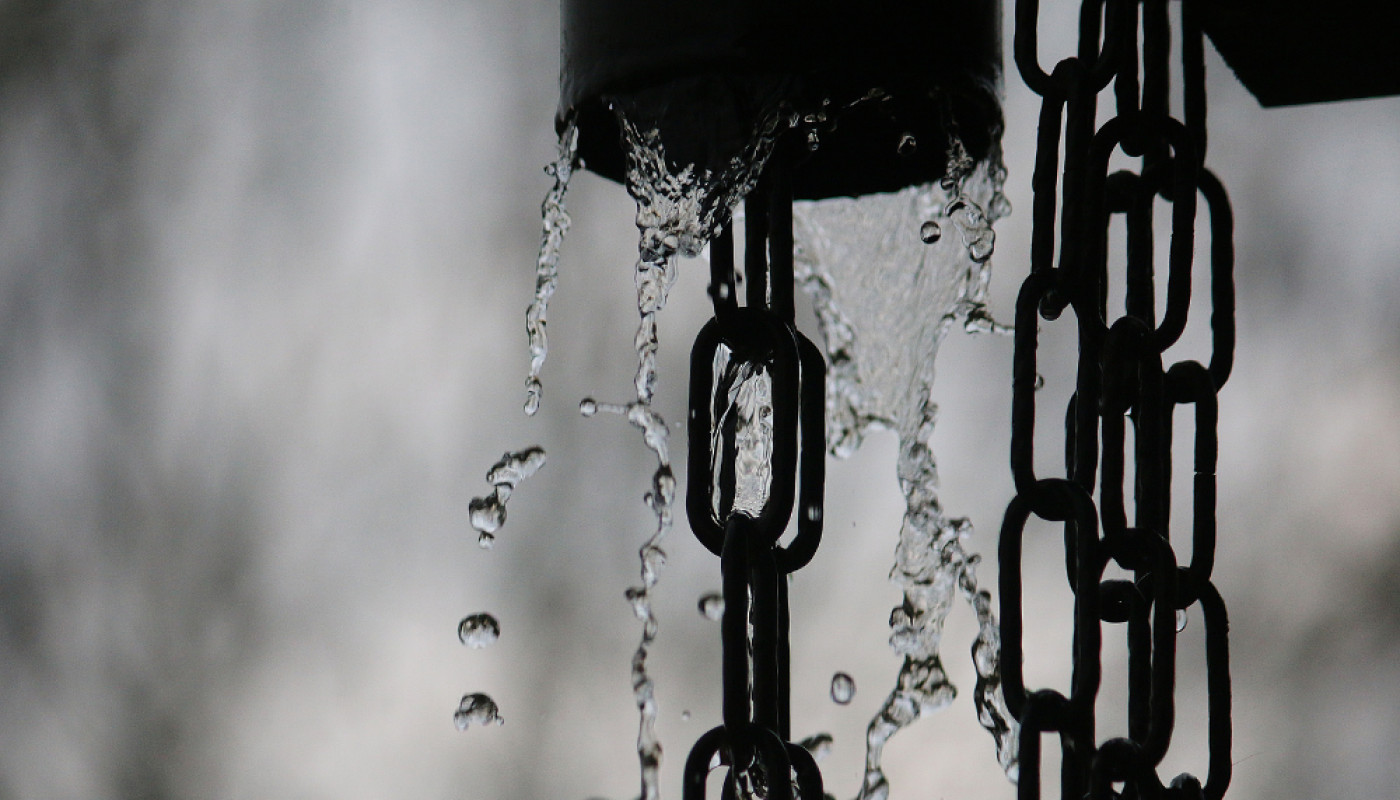
Instead of disappearing inside a conventional closed downpipe, the water remains visible as it follows the chain. Depending on the design, it may run along links or pass successively through a series of cups.
This makes the arrival point particularly important. A chain positioned above bare, compacted soil may still result in splashing or localised erosion. Positioning it above a suitable receiving area gives the runoff somewhere more appropriate to go.
Several possibilities can be considered depending on the garden:
A water butt or rain barrel for collection.
A gravel bed that receives and disperses the flow.
A rain garden planted with suitable species.
A decorative basin with appropriate capacity.
A permeable area designed to encourage infiltration.
The chain therefore creates the connection between the gutter and the chosen destination rather than acting as the complete drainage solution itself.
Collecting roof water for later use
One of the most practical ways to incorporate a rain chain into a garden is to position a collection container beneath it.
Roof runoff can then be directed towards a water butt or another suitable reservoir. The collected water may subsequently be used in the garden where appropriate, reducing the need to immediately send every litre of rainfall away from the property.
This arrangement can be particularly interesting near flower beds or vegetable-growing areas, where having stored rainwater nearby makes watering more convenient.
The capacity of the container still needs to correspond reasonably well to the amount of water arriving from the relevant section of roof. A small decorative vessel can fill rapidly during a substantial shower.
An overflow route should therefore be considered as part of the installation. Once the container is full, excess water still needs somewhere suitable to go without collecting against the building.
Using a rain chain above a gravel area
Collecting water is not always the objective. Sometimes the priority is simply to prevent runoff from repeatedly striking the same patch of exposed soil.
A gravel or stone receiving area can be incorporated beneath rainwater chains to receive the falling water and reduce direct impact on the ground.
This can also create a deliberate transition between the chain and the landscaping. Instead of the chain appearing to stop abruptly at ground level, stones, pebbles or another permeable feature visually complete the installation.
The underlying conditions remain important. Gravel does not automatically solve poor drainage, and water should not simply be encouraged to infiltrate immediately beside foundations without considering the property and soil conditions.
The receiving area therefore needs to be designed according to the amount of runoff, the characteristics of the soil and its position relative to the building.
Can a rain chain feed a rain garden?
A rain garden is another possible destination for roof runoff.
Rather than attempting to remove rainwater immediately, this type of planted area is designed to receive water temporarily and allow it to infiltrate according to the characteristics of the site.
A chain can form the visible first stage of this journey. Water descends from the roof and can then be directed towards the planted area through an appropriate surface channel or landscaping feature.
This creates an opportunity to make water part of the garden design rather than treating it solely as something to conceal.
The plants and dimensions of the receiving area must nevertheless suit the conditions. A permanently waterlogged corner is not automatically a functioning rain garden, and drainage problems close to a building should be investigated rather than disguised with planting.
Rainwater chains can help reduce uncontrolled splashing
One of the simplest problems caused by roof runoff is also one of the most visible: splashing.
When water falls freely from a gutter outlet, it can strike paving, soil or mulch with considerable force. Soil may end up on the wall, mulch can move and the surrounding area can become muddy.
A correctly positioned chain gives water a surface to follow on its way down.
Cup-style designs can offer a more contained path because the water moves from one cup to the next. Link chains create a more open effect, with water travelling along and around the links.
Neither design eliminates every splash in every weather condition. Wind, rainfall intensity, roof area and installation all influence how closely the water follows the intended route.
The choice between links and cups should therefore consider function as well as appearance.
Links or cups: which design works best around plants?
Traditional link chains offer a simple appearance and make the movement of water particularly visible. They can work well where some splash at the bottom is acceptable and where the receiving surface has been designed accordingly.
Cup chains collect water successively as it descends. This can make them useful where the objective is to guide runoff more directly towards a container or defined landing point.
For a landscaped area immediately beside the chain, the difference can matter. Delicate plants may not appreciate repeated heavy splashing, while stones, gravel and moisture-tolerant planting can be better suited to the immediate surroundings.
The garden design should therefore start with a practical question: where should the water end up?
The decorative style of the rainwater chains can then be selected around that requirement.
What happens during heavy rain?
A rain chain must deal with water coming from a roof, so rainfall intensity cannot be ignored.
During heavier downpours, the volume reaching a single gutter outlet can increase substantially. Depending on the chain design, roof catchment area, wind and gutter arrangement, some water may splash or escape from the intended route.
This is why replacing a conventional downpipe with a chain should not be treated as a purely decorative modification.
The existing guttering, outlet and final destination of the water all need to remain capable of dealing with the expected runoff.
Where a property already experiences serious pooling, overflowing gutters or water accumulating near its foundations, the priority should be to understand and correct the drainage problem. Rainwater chains are not a substitute for an appropriately designed drainage system.
Stability also matters in the garden
Because a rain chain is exposed, wind can move it. Excessive movement can cause water to miss the receiving container and can also make the chain strike nearby surfaces.
The lower end can therefore be secured or anchored where necessary.
The chain should also be correctly sized for the distance between the gutter outlet and its termination point. A poorly positioned chain that ends too high above a small container can create more splash than expected.
Nearby walls, windows, paths and plants should all be considered when deciding exactly where the water will fall.
These details are particularly relevant in gardens where the chain is positioned close to a terrace or frequently used walkway.
Maintenance remains part of rainwater management
One advantage of an exposed system is that its operation is easy to observe.
Leaves and debris can obstruct the gutter or outlet above the chain. A collection container can become full. Gravel may accumulate organic matter over time, while plants can grow into the receiving area.
Periodic checks help ensure that water continues to follow the intended route.
After particularly heavy rainfall, it can also be useful to look at what actually happened on the ground. Did the container overflow safely? Did water remain close to the house? Has mulch been displaced? Is the chain stable?
The garden itself provides useful clues about whether the installation is working as intended.
Turning roof runoff into part of the garden design
The main attraction of rainwater chains is the combination of practical water guidance and visible design.
A conventional downpipe is generally intended to disappear into the architecture. A rain chain does the opposite. During rainfall, water becomes part of the visual character of the exterior, moving from the gutter towards a carefully chosen feature below.
That feature might be a simple gravel bed, a large collection vessel, a stone basin or part of a broader rain garden.
The most successful installations are therefore not those where a decorative chain has simply replaced a pipe. They are the ones where the entire path of the water has been considered, from the roof surface to its final destination.
Used in this way, rainwater chains can help organise runoff, support rainwater collection and integrate water more deliberately into the landscape. They remain one component of the system rather than the whole solution, but in a well-planned garden, that visible connection between roof and ground can be both useful and decorative.
Similar

Can Customer Support Thrive In A Visually-driven Online World?

Exploring The Popularity And Cultural Significance Of Garden Gnomes

Main causes of habitat loss

How to reduce habitat loss?

Types of habitats

Understand everything about natural habitat
