Table of contents
Modern forestry equipment has revolutionized the way land rehabilitation is approached, offering unprecedented efficiency and effectiveness. In today's world, reclaiming degraded landscapes and restoring them to ecological health has never been more essential. Dive into the following sections to uncover how advanced machinery is reshaping land rehabilitation, optimizing every step from clearing to replanting.
Revolutionizing land clearing
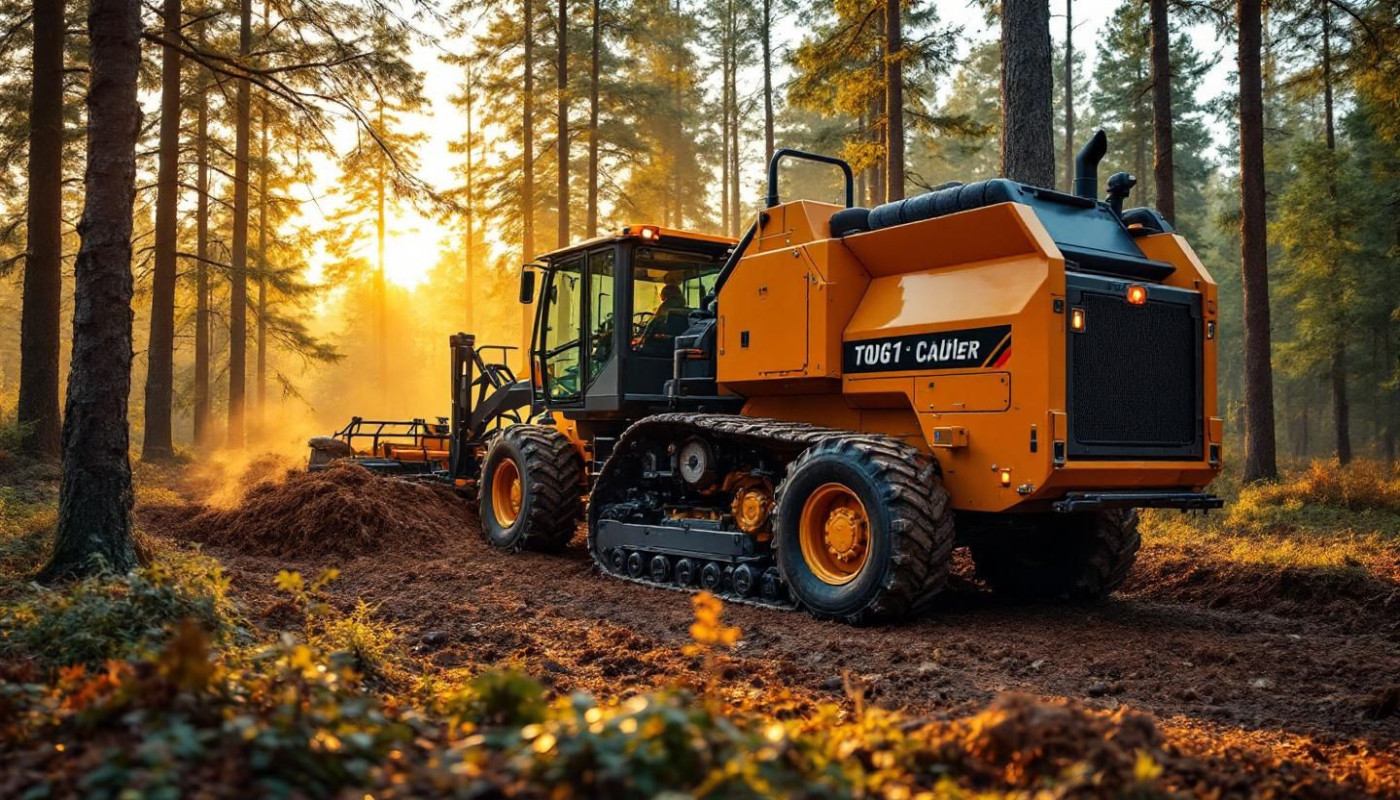
Contemporary forestry equipment has transformed efficient land clearing by integrating advanced technologies that maximize productivity while minimizing ecological disturbance. Modern heavy machinery, such as precision-guided mulchers, computerized harvesters, and agile feller bunchers, enables tailored approaches for land rehabilitation, supporting sustainable forestry initiatives. These machines are designed to selectively remove unwanted vegetation and trees, ensuring that soil structure and fertility remain intact and promoting rapid ecosystem recovery. Through targeted biomass reduction, current equipment allows operators to reduce fuel consumption, limit soil compaction, and preserve valuable understory species, all of which are vital for long-term land health. Leverage your knowledge of silviculture to explore how these tools contribute to a more harmonious balance between human activity and forest regeneration, driving progress in responsible environmental stewardship.
Enhancing soil restoration methods
Modern forestry technology has revolutionized soil restoration and land rehabilitation through the use of advanced techniques and machinery. Specialized attachments, such as mulchers and subsoilers, are designed to improve soil amelioration by breaking up compacted layers and incorporating organic matter, which directly enhances soil health. Precision is further achieved with GPS-guided systems, ensuring targeted application of erosion control measures and reducing the risk of soil compaction during post-clearing activities. By effectively managing surface runoff and reinforcing the landscape structure, these innovations play a pivotal role in stabilizing disturbed sites and promoting long-term regeneration.
Land rehabilitation efforts now benefit from a greater understanding of site-specific requirements, allowing professionals to deploy forestry technology with maximum efficiency. As a land restoration specialist, leveraging these advances can significantly boost the success of soil restoration projects. Integrated approaches, combining mechanical interventions and precision mapping, enable a proactive stance against erosion and degradation. By utilizing such state-of-the-art equipment and techniques, it is possible to set new standards in erosion control and foster resilient ecosystems, offering both immediate and lasting improvements to degraded lands.
Boosting reforestation success
Modern tree planting equipment, such as automated planters and drones, is transforming the efficiency of reforestation and land rehabilitation. These advanced technologies implement precision seeding, allowing accurate placement of seeds and optimizing conditions for seedling establishment. Automated planters can cover large areas rapidly, ensuring even distribution and reducing manual labor, while drones assess terrain and deposit seeds in locations that maximize survival. This integration not only accelerates reforestation but also significantly improves seedling survival rates, which supports sustainable forestry practices by increasing biodiversity and habitat restoration.
The adoption of such equipment is instrumental for professionals seeking effective ecosystem management. Readers with experience in land rehabilitation are encouraged to leverage their expertise and knowledge to enhance reforestation outcomes by adopting innovative machinery. Those interested in learning more about advanced solutions for forestry and land rehabilitation can check my reference for specialized equipment and further information on sustainable forestry practices.
Monitoring progress with smart technology
The integration of smart technology has revolutionized land monitoring within forestry equipment applications, especially in ecological restoration and land rehabilitation projects. Remote sensing and satellite imagery now enable the frequent collection of high-resolution data across vast landscapes, providing a comprehensive overview of vegetation recovery and soil stability. By analyzing vegetation indices derived from these technologies, professionals can assess plant health, biomass, and overall ecosystem development with unprecedented accuracy. Data analytics play a pivotal role by transforming this influx of information into actionable insights, helping operators adjust management strategies in real time to enhance project effectiveness. Those with experience in environmental monitoring are encouraged to utilize these advanced tools, as they offer a scalable approach to track progress, ensure adaptive management, and support the long-term success of restoration efforts.
Reducing environmental impact
Modern forestry equipment plays a transformative role in reducing the environmental impact of land rehabilitation initiatives. By integrating advanced, energy-efficient engines and emission control technologies, eco-friendly equipment significantly limits air pollution and contributes to lowering the overall carbon footprint during operations. Many machines now operate with low-impact tires or tracks, which distribute weight more evenly and minimize soil compaction, preserving the integrity of sensitive ecosystems. This kind of low-impact forestry not only supports sustainable practices, but also ensures that the disruption to flora and fauna remains minimal. Professionals engaged in land rehabilitation are encouraged to leverage their expertise and adopt these innovations, ensuring their projects align with the highest standards in sustainable land management while delivering tangible improvements for the environment.
Similar

Main causes of habitat loss

What To Consider When Buying A Watch Box For A Large Collection

Exploring The Popularity And Cultural Significance Of Garden Gnomes

Creating A Serene Atmosphere: The Impact Of Minimalist Wall Art On Room Ambiance
